Showing posts with label Braaains. Show all posts

Saturday, March 14, 2009

Back to my emails...

Just taking a break in my preparations for Finals Week, as I can't afford to neglect my email any longer. As usual, there's some pretty cool things as far as news@nature goes. So here I shall display the ones I have found most interesting, in the order in which I have viewed them.

Obama overturns stem-cell ban

President's executive order will allow US human embryonic stem-cell research to thrive at last.

Scientists and research advocates worldwide are celebrating the removal of rules limiting research on human embryonic stem cells in the United States, which they say have restricted the field's progress for seven and a half years.

The National Institutes of Health (NIH) in Bethesda, Maryland, is now working out policies that will allow researchers to apply for grant money from the agency to study some of the hundreds of cell lines created since 9 August 2001, when President George W.


One of the many reasons I like this Obama guy. I wonder how many thousands of unwanted embryos have been destroyed in vain when they would have otherwise been donated to researchers?
` I hope that U.S. scientists can catch up to other countries that have been studying embryonic stem cells all this time....

What else we got?

Evidence for ancient horse ranch uncovered

Traces of earliest known milking of horses in Kazakhstan.

Humans rode and milked horses as early as 3500 BC, say an international group of researchers. The findings come from ancient settlements in Kazakhstan, where horse jawbones showed signs of bridling and ceramic cooking vessels contained traces of horse milk.


Though humans have evidently had a long history with horses, dogs have been domesticated some 13,000 years B.C. or longer, as betrayed by their remains having been put in human burial sites.

Oh no, looks like some rainforests might actually compound carbon emissions!

Climate change crisis for rainforests

Drought could turn carbon sinks into sources.

The tropical forests of South America, Africa and Asia take up and release huge amounts of carbon each year. On the whole, they are a significant 'sink' for atmospheric carbon dioxide, but their future role in sequestering the greenhouse gas is uncertain.


Apparently, when vegetation dies, it releases carbon. Droughts can cause enough of the forest plants to die off, emitting more carbon than the rest of the forest can absorb! Oh bother....

And now, scientists may have to rethink what makes atoms do what they do....

Atomic nucleus takes two shapes

The squashed heart of a sulphur isotope fluctuates between different states.

Contrary to some expectations in the world of nuclear physics, researchers have found that a radioactive nucleus of sulphur oscillates between two different shapes, sometimes appearing like a sphere and other times like an American football. The result, reported this month by researchers in France, is causing nuclear physicists to rethink prevailing theories about what makes some nuclei stable and others prone to splitting apart.


I would assume that understanding this distinction may allow greater control over how one can manipulate atoms. You know, like for a new kind of nuclear power or some kind of other technology which may or may not feature 'splosions.

And here we have yet another use for genetic decoding...

Genetic test predicts eye colour

Forensic tool could help catch criminals.

Cheryl Jones

Police might soon be able to tell the eye colour of criminals from DNA recovered from crime scenes, thanks to a new genetic study.

A team of scientists led by Manfred Kayser, of Erasmus University Medical Centre in Rotterdam, has developed a method that predicts eye colour with unprecedented accuracy.


And here's another thing where our genetic past has come back to haunt us. Genes do that a lot, contrary to what you might think, though usually it seems the gene simply becomes inactive for a while before a new mutation activates it again.
` This, however, is different....

The resurrection of a disease-linked gene

An unusual tale of a gene lost, then found, during human evolution.

A glimpse into the evolutionary history of a gene linked to Crohn's disease has revealed a bizarre example of just how dynamic genomes can be.

The gene, called Immunity-related GTPase M (IRGM), seems to have been destroyed in the ancestor of Old and New World monkeys millions of years ago, only to be brought back to life again in the common ancestor of humans and great apes when a retrovirus lurking in the genome inserted itself into the gene.

Interesting. So, from what I know, a retrovirus is a carrier of genetic information, which replicates itself by inserting its RNA into a host cell and reverse-transcripts it into DNA, and it winds up becoming part of the cell's DNA.
` If it's a germ cell, it gets passed on into the next generation. I wish I remembered exactly how it works, though I don't have time for any more research.
` Apparently, this disease mutation somehow got into a retrovirus which carried it all over the place until it wound up settling down in the ancestors of humans and our closest ape relatives.

Bear in mind that my memory would be partly refreshed if I were able to access the rest of the article.
` *Sigh*. It's sad how much one can forget over... a decade. Anyway.... here's something I can understand better.

Microbicide protects monkeys from HIV-like virus

Gel may fight virus by suppressing counterproductive immune responses.

A microbicide made from glycerol monolaurate — an ingredient in some foods and cosmetics — can protect female monkeys from contracting an HIV-like virus, researchers have found. The compound may act by suppressing an unfortunate immune response that helps the virus rather than fights it.


I believe I've brought this one up before, haven't I? Indeed, it was this particular immune response that caused the virus to thrive rather than be injured!

Cutting calories may improve memory

Elderly people benefit from caloric restriction.

Cutting calories by 30% for three months has boosted memory and reduced insulin concentrations in a group of healthy elderly people.

Previous research on the possible benefits of calorie restriction has yielded mixed results.


I'm growing impatient to know whether or not any benefits from lower energy intake will be found....

Friends dis-united?

Models of behaviour are often simplistic but can guard against false assumptions.

"Why are all the black kids sitting together in the cafeteria?" psychologist Beverly Daniel Tatum asked in a book of that title in 1997. Her answer – that black kids need to stick together to develop a positive racial identity in the face of negative stereotypes – predictably divided opinion.

Uh-oh! I hope Dr. Nociceptor doesn't get any ideas....

Old plutonium found in dump

Weapons-grade material discovered at Hanford nuclear site.

The clean-up of a decommissioned US nuclear weapons plant has unearthed one of the oldest known samples of man-made plutonium.

Workers found roughly half a gram of weapons-grade plutonium-239 (Pu-239) in an abandoned safe at the Hanford Site in rural Washington state.


Oh yeah, quantum teleportation. It's very difficult to control, but it is possible to get tiny individual particles to jump from one place to another.
` I have no recollection of how this is done, though I do remember that it only works on single particles, and inconsistently at that. In other words, transporting objects this way does not seem feasible.

Atom takes a quantum leap

Ytterbium ion is the first element to be teleported over a distance.

Researchers have teleported a single ion of the element ytterbium over a metre in distance, shattering previous records. Photons have gone further but teleportation of matter has only occurred between ions in the same trap over a few micrometers.


Darn, I wish I could read the rest!

Same here:

Brain imaging measures more than we think

Anticipatory brain mechanism may be complicating MRI studies.

Popular brain-imaging techniques may be painting a misleading picture of brain activity, according to a new study.

Scientists using techniques such as functional magnetic resonance imaging (fMRI) make the assumption that blood flow into a particular brain region is directly linked to the amount of activity in the cells of that region.


Or... or... what else?

Hey, this is cool;

Cheating bacteria could treat infections

Freeloaders could help their hosts by undermining microbe cooperation.

Infections could be treated by adding more bacteria, say researchers who have shown that cooperation between microbes is undermined outside the bounds of the Petri dish by a few 'cheats'.

Similar to colonies of social creatures such as ants, bacteria can rely on a simple solution to the difficulties of surviving in harsh environments — cooperation.


Mua ha ha! It appears they are working to turn hostile bacteria on themselves!

$630-million for push to eradicate polio

Gates Foundation leads donors promising cash for vaccination and research.

The global drive to eliminate the last pockets of polio infection is to receive a boost of more than half-a-billion dollars from international donors. The Bill & Melinda Gates Foundation, Rotary International and the governments of the UK and Germany this week pledged $630 million over five years for a massive final push to eradicate the crippling disease.

Dinosaur fossils suggest speedy extinction

Arctic find challenges the idea that the massive reptiles declined slowly.

Fossils uncovered recently in the Arctic support the idea that dinosaurs died off rapidly — perhaps as the result of a massive meteor hitting Earth. The finding contravenes the idea that dinosaurs were already declining by this time.

I've heard of a nanoscale needle that serves as a radio - now this:

Tiny springboards detect viruses in fluids

Wobbly cantilevers 'feel' pathogens lock onto their targets.

Viruses can now be detected directly in fluids, thanks to microscopic diving boards that vibrate when the pathogenic particles stick to cellular proteins. The findings could eventually lead to better blood tests and more sensitive ways of measuring whether new drugs are binding to their targets.

Does that not blow your mind?

And here's something even more amazing:

Scientists weave invisibility cloak

Metamaterial sheet shields objects from prying microwaves.

Scientists in the US have made a sheet that can be draped over an object to render it 'invisible' — albeit to microwave radiation rather than visible light.

The new cloak works for a range of microwave frequencies.

Last but not least... something which has nothing to do with science but is worth mentioning at least. This came from Sometimes Saintly Nick... behold... Babeh Kitteh and Babeh Deer!


The cuteness will paralyze your will! Resistance is futile!

Wednesday, March 04, 2009

You didn't read this, but....

...though I haven't gotten to anyone's blog, one might remember (or not) ones of the nature science news stories I couldn't access. Well, I found a way! ...Thanks to faithful internet companion, Galtron.

Anyway, it was called Hidden memories guide choices by Heidi Ledford. Hidden memories? Huh? No, seriously, I learned about this even before college... there are memories you can talk about and are aware of, called 'explicit memory', as well as ones you can be shown to have, but can't seem to remember, in which case they are called 'implicit memories'.

For example, amnesiacs who can't form new memories can learn skills - like writing backwards in a mirror - and yet claim they don't know how. They can also solve specific puzzles more quickly even when they claim they have never seen them.

Here's the meat of the article....

In a study published in Nature Neuroscience, Joel Voss from the Beckman Institute for Advanced Science and Technology at the University of Illinois, Urbana-Champaign, and Ken Paller of Northwestern University in Evanston, Illinois, report that implicit memory may be at work when we recall images that we have seen before.

Voss and Paller showed 12 people a series of kaleidoscopic images. Participants were allowed to devote their full attention to half of the images, but were distracted by a number task while viewing the remaining half. That distraction made it harder to consciously remember the pictures.

Don't I know?

Then, 45 seconds after studying the images, participants were tested on how well they could distinguish an image they had previously seen from a new, but very similar picture.

Each time they selected an image, they were asked to gauge how certain they were of the choice. Did they clearly remember the picture? Was it merely familiar? Or was it simply a guess?

Overall, it seemed that a guess was not always a guess. When tested on the images they had seen, participants 'guessed' correctly more often than they 'remembered' correctly.

But that's not all! They also found a unique electrical brain signature that corresponds to a 'correct guess' of an image they had viewed while distracted. It appears 200 milliseconds after the image is shown, before one has time to think about it.

Similarly, Daniel Schacter (Harvard) and Scott Slotnick (Boston College) have found differences in brain activity in the visual cortex depending on whether the participants got it right or wrong. Perhaps it's related?

Don't get too excited. This doesn't mean that a whole new generation of subliminal messages is about to be snapped up by the next Dr. Nociceptor. That might not work, according to Voss, because it is too early to tell. After all, there's a large difference between influencing folks to think something in particular and recalling meaningless kaleidoscope images.

Saturday, February 28, 2009

Checking more of my email!

Because I just need to. Took a long enough nap today, should be able to pull it off. Here's a few of the tidbits I wanted to point out... before deleting them! Here's some inaccessible Nature articles...

Scientists find world's biggest snake

'Titanic' boa fossils provide clues to past tropical climate.

Researchers have found fossils of the biggest known snake in the world, a discovery that could shed light on the climate of the tropics in the past.

The scientists estimate the snake lived 58 to 60 million years ago and was around 13 metres long.

To read this story in full you will need to login or make a payment

Pygmies share a recent common ancestor

The rise of farming may have caused formation of diverse groups.

Pygmies in Western Central Africa may have evolved from a common ancestral group and, less than 3,000 years ago, split into the diverse array of populations seen today, according to a new genetic study. The researchers believe that the spread of non-pygmy farmers through Western Central Africa may have driven pygmies into isolated groups, prompting their speedy evolution into distinct populations.

To read this story in full you will need to login or make a payment

What causes schizophrenia?

Findings from a 'brain training' study challenge theory.

Researchers in Sweden have revealed a surprising change in brain biochemistry that occurs during the training of working memory, a buffer that stores information for the few second required to solve problems or even to understand what we are reading. The discovery may have implications for understanding disorders in which working memory is deficient — such as schizophrenia and attention deficit hyperactivity disorder (ADHD).

To read this story in full you will need to login or make a payment

Hidden memories guide choices

Images slip unnoticed into the brain.

Memories that we are not aware of may be just as accurate as those we recall, researchers have found. And they might also provoke unique changes in the brain's electrical activity during recall.

To read this story in full you will need to login or make a payment

Robot copes with shifting sands

Moving over challenging terrain requires a change of gait.

Walking over loose sand is hard work, even for robots. But a team of US researchers has shown that an insect-like robot can make quicker progress in sand by using a different gait from that used on hard ground1.

To read this story in full you will need to login or make a payment

Child abuse leaves lasting 'scars' on DNA

Lingering marks on DNA could amplify stress responses.

Suicide victims with a history of abuse during childhood are more likely to carry chemical changes to their DNA that could affect how they respond to stress as adults, a study has found.

Those with no history of childhood abuse did not show the same pattern of DNA modification, and had normal expression of NR3C1, a gene linked to stress responses.

To read this story in full you will need to login or make a payment

Burnt oil and gas, not vegetation, may have caused the soot layer at the end of the Cretaceous period.

The impact of a huge asteroid or comet at the end of the Cretaceous period 65 million years ago is generally held responsible for the sudden demise of 60–80% of all species on Earth. But new results challenge the common idea that the extinctions were partly caused by global wildfires triggered by the violent impact.

To read this story in full you will need to login or make a payment

Darwin 200: Human nature: the remix

People's mindsets are neither fixed by evolution nor infinitely malleable by culture. Dan Jones looks for the similarities that underlie the diversity of human nature.

Darwin famously gave scant attention to humans in On the Origin of Species, contenting himself with the teasing pledge that "Light will be thrown on the origin of man and his history". The promised light came in the The Descent of Man, and Selection in Relation to Sex (1871) and The Expression of the Emotions in Man and Animals (1872), in which the notion of a common human origin was crucial.

To read this story in full you will need to login or make a payment

Oh yeah - have I mentioned it's been 200 years since Charles Darwin's birthday.
Hence, this:

First Junior Skeptic Book Released
to Portuguese School Kids!

In commemoration of Charles Darwin’s 200th birthday on February 12th, 2009, the Skeptics Society is thrilled to unveil a major new educational outreach project: the release of the first Junior Skeptic book, Evolução (“Evolution”).

Right now, 10,000 copies of this gorgeous, full-color, illustrated kids’ science book are being distributed to public school students in Portugal — completely free.

Reprising material originally published in Junior Skeptic #26 and #27, the new book is produced by Pat Linse, written by Junior Skeptic Editor Daniel Loxton, and illustrated by Daniel Loxton and Jim W. W. Smith. This Portuguese-language translation was prepared by immunologist and science popularizer Vasco M. Barreto.

The book is published by our colleagues at the Calouste Gulbenkian Foundation (an international nonprofit organization headquartered in Lisbon) as part of an ambitious Darwin 2009 public education program with partners that include the American Museum of Natural History and the Portuguese Ministries of Science & Technology and Education. Their Darwin 2009 celebrations include the largest and more comprehensive evolution-themed museum exhibit in the world (“Darwin’s Evolution”), a high profile series of public conferences (to be opened by paleontologist Niles Eldredge on February 13th) — and the full-color book based on Junior Skeptic.

Wondering where you can get your hands on a copy? You’ll have to wait. This free Portuguese-language school edition is an exclusive educational project for students in Portugal.

But not to worry: an English-language version is in full production now at a major North American publisher! Look for the enhanced and expanded version scheduled for wide release early in 2010….

Check it out!

And to counterpoint that one: Kooky Creationism in the U.K.

On the other hand, a lecture I was made aware of...

Thank God for Evolution

How the Marriage of Science and Religion
Will Transform Your Life and Our World

The Reverend Michael Dowd is one of the most inspiring speakers in America today. His lecture/sermon is based on his bestselling book, Thank God for Evolution: How the Marriage of Science and Religion Will Transform Your Life and Our World, which has been endorsed by 5 Nobel Prize-winning scientists and dozens of other scientific and religious luminaries across the spectrum. Since April 2002, he and his wife, Connie Barlow, an acclaimed science writer, have lived permanently on the road sharing a sacred view of evolution with religious and secular audiences of all ages, as America’s evolutionary evangelists. At home in both conservative and liberal settings, and uniquely gifted at building bridges between religious and nonreligious people, Michael — once a young-earth creationist minister — is passionate about sharing the 14-billion-year epic of evolution in ways that uplift and expand heart, mind, and soul. Don’t miss this unique performance.

And yet, sometimes, this happens when some people look harder at religion....

Losing My Religion

How I Lost My Faith Reporting on Religion in America
— and Found Unexpected Peace

William Lobdell’s journey of faith — and doubt — is one of the most compelling spiritual memoir of our time. Lobdell became a born-again Christian in his late 20s when personal problems drove him to his knees in prayer. As a newly minted evangelical, Lobdell — a veteran journalist — noticed that religion wasn’t covered well in the mainstream media, and he prayed for the Lord to put him on the religion beat at a major newspaper. In 1998, his prayers were answered when the Los Angeles Times asked him to write about faith. What happened next was a roller-coaster of inspiration, confusion, doubt, and soul-searching as his reporting and experiences slowly chipped away at his faith. While reporting on hundreds of stories, he witnessed a disturbing gap between the tenets of various religions and the behaviors of the faithful and their leaders. He investigated religious institutions that acted less ethically than corrupt Wall Street firms. He found few differences between the morals of Christians and atheists. As this evidence piled up, he started to fear that God didn’t exist. He explored every doubt, every question — until, finally, his faith collapsed. Hear his remarkable story in this lecture based on his new book.


Now this is BOSS cool!

The Search for Living Planets

We are now nearing a turning point in our quest for life in the universe — we now have the capacity to detect Earth-like planets around other stars. But will we find any? In The Crowded Universe, renowned astronomer Dr. Alan Boss — a research scientist at the Carnegie Institution and a fellow of the American Geophysical Union — argues that based on what we already know about planetary systems, in the coming years we will find abundant Earths, including many that are indisputably alive. Life is not only possible elsewhere in the universe, Boss argues — it is common. Boss describes how our ideas about planetary formation have changed radically in the past decade and brings readers up to date on discoveries of bizarre inhabitants of various solar systems, including our own. America must stay in this new space race, Boss contends, or risk being left out of one of the most profoundly important discoveries of all time: the first confirmed finding of extraterrestrial life.


This looks kinda f***ed up....


The Medea Hypothesis

Is Life on Earth Ultimately Self-Destructive?

In The Medea Hypothesis, renowned paleontologist Dr. Peter Ward proposes a revolutionary and provocative vision of life’s relationship with the Earth’s biosphere, one that has frightening implications for our future — yet also offers hope. Using the latest discoveries from the geological record, he argues that life might be its own worst enemy. This stands in stark contrast to James Lovelock’s Gaia hypothesis — the idea that life sustains habitable conditions on earth. In answer to Gaia, which draws on the idea of the “good mother” who nurtures life, Ward invokes Medea, the mythical mother who killed her own children. Could life by its very nature threaten its own existence? Ward demonstrates that all but one of the mass extinctions that have struck Earth were caused by life itself. He looks at our planet’s history in a new way, revealing an Earth that is witnessing an alarming decline of diversity and biomass — a decline brought on by life’s own “biocidal” tendencies. And the Medea hypothesis applies not just to our planet — its dire prognosis extends to all potential life in the universe. Breathtaking in scope, The Medea Hypothesis is certain to arouse fierce debate and radically transform our worldview.


Bad, humans, bad!

Why People Behave Badly

One of the most difficult problems in the social sciences is understanding why some people intentionally inflict emotional and physical pain on others. Such intentional pain occurs not only on a local level — within families, with “friends,” or in work situations, but also on a national and international scale — Hitler’s Holocaust, Stalin’s purges, and Chairman Mao’s slaughter of millions. Neuroscience is providing the potential for a revolution in our understanding of why “bad” people do what they do.

Professor Barbara Oakley uses evolutionary theory — as well as an unusually adventurous background that has earned her the nickname of a “female Indiana Jones,” to knit together disparate pieces of research that point toward answers to some of the most compelling questions in the social sciences and humanities. Dr. Oakley’s work at Oakland University involves bioengineering in many different contexts, such as the effects of electric fields on cells and the complex relationship between neurocircuitry and social behavior. She worked for several years as a Russian translator on Soviet trawlers in the Bering Sea; she met her husband while working as a radio operator at the South Pole station in Antarctica; and she has gone from private to regular Army Captain in the U.S. military. Her critically acclaimed, tongue-in-cheek titled book Evil Genes: Why Rome Fell, Hitler Rose, Enron Failed, and My Sister Stole My Mother’s Boyfriend takes readers on a provocative exploration of the darkest recesses of the human personality.


It's late, but I'm glad I squeezed that in. Much like I would a lemon. Nappy-poo is wearing off.

Thursday, December 21, 2006

How well can human beings track scents?

` According to a Nature News article I was reading by Erika Check, people can learn to track scents if they would just give it a try!
` Sure, human beings don't have nearly as many genes that code for smell receptors than, say, dogs or rats. But is our sense of smell really as inferior as it seems? Noam Sobel at the University of California in Berkeley and the Weizmann Institute of Science in Israel, wondered just that.
` He and his team got out the chocolate essential oil and laid out detectable amounts in a grass field for a length of ten meters (32-feet).
` So, could people follow that trail? Thirty-two student volunteers were blindfolded and earplugged and set out to test this out. In ten minutes, each volunteer was given three chances to track this scent. Two-thirds of them actually did it! Practicing this task over three days, unsurprisingly, only turned up improvement.
` The team counted the number of inhalations the students were taking, and also found what happens when you block one nostril at a time. This, I found, was interesting: 'Stereo smell' has been discovered in rats before, and the fact that the students had trouble finding the direction of the scent with only one nostril suggests that people have this, too.
` Well, no kidding! Am I the only one to notice that people can tell the direction a scent is coming from?
` So, yes, we are capable of tracking scents. That is not so surprising. Of course, dogs can track scents that we can't even smell. Even so, it's good to know that you can trace an odor across long distances. (Especially, I suspect, if you crawl on the ground where the scent is at, like our four-legged friends do!)
` This, here, however, seems unfounded:

"We have a much better sense of smell than rats and dogs because of our greater brainpower," says Shepherd. "This shows that in a few training sets, humans can achieve something that other animals spend their life being trained to do."
` Here is the beauty of peer review and skepticism:
Dogs are still better at picking up the whiff of a particular person from a discarded item of clothing, or alerting officials to traces of drugs, explosives and other contraband, says neuroscientist Jess Porter of the University of California, Berkeley, and first author on the paper, which is published online by Nature Neuroscience2.
` Indeed, we can't smell everything that another species can. We also cannot discern between many scents. However, since a variety of animals use their sense of smell as their main sense (including hedgehogs, which can survive in the wild even if they are blind), it would be foolish not to try this out ourselves.
"Our work certainly proves that if you can smell something, you can improve your ability to track it. So if you walk by a bakery on your way to work and you can smell it, you can probably close your eyes and find your way to the bakery by your nose," says Porter. "That's more likely than sniffing out a bomb."
` Alas, why did I choose this one to point out? Because I wasn't in time to view these:

Dolphin feared extinct in polluted Yangtze
Overfishing and boat noise are killing aquatic mammals in Chinese river.

The mutation that takes away pain
Studies of rare disorder shed light on pain mechanism.

Saying goodbye to periods
Can women eliminate menstrual bleeding without problems?

Rare reptile fossil found in Antarctica
Researchers battle inclement weather to excavate juvenile plesiosaur remains.

` Waaaaah! What is wrong with these people? Taking them away before I can read them! The humanity of it all!
` However, I did not miss a most awesome article about how Turin's quantum physics hypothesis about the sense of smell does have some amount of credibility to it!

Sunday, September 17, 2006

Studying the feeling of being 'at one'

` According to the Nature article, Nuns go under the brain scanner by Helen Pearson...

` There are a network of brain regions, identified by neuroscientists, that activate when nuns feel that they are at one with God. And, if these regions are artificially stimulated, anyone could have such experiences without even believing in God or anything of the type!
` Some may say that's cheating, but I disagree - the very nonreligious Lou Ryan had a completely life-changing experience when he felt just how small he was in the cosmos. ...When he tried mushrooms. It completely changed his life.
` Mario Beauregard of the University of Montreal led the study because he wanted to know what goes on in the brain when someone is having such mystical experiences, (feeling at one, at peace, etc.) because he has had the same experiences.
` He and his colleague, Vincent Paquette, went out and found 15 Carmelite nuns who volunteered to be put in an fMRI. (Apparently, they said couldn't connect with God at will, and so they were not scanned while praying.) Once inside, they were asked to relive the most mystical moment in their lives. They were also asked to relive an experience when they felt at union with another person.
` They reported in Neuroscience Letters that there were a collection of brain areas found to be more active during the recollected mystical experience than the emotional one.
` One was the caudate nucleus, which is associated with such feelings as happiness and bliss. And there was also more activity in regions that are thought to integrate feelings from the rest of the body, which may explain why they feel at one with both God and their surroundings. There are also more electrical activity that is associated with deep sleep and meditation.
` There was also more actication in the temporal cortex, which Beuregard says might be expected of a complicated emotional and cognitive experience.
` However, unlike previous studies that show a 'God module' of the brain, these studies dealt with memories rather than the moment of the actual experience.
` Perhaps even being able to mimic such brain states in ailing nonbelievers could help them to benefit from the same feelings that religious people seem to. ...But would anyone do such a thing? In any case, such research could be important because it these feelings are important to all cultures.

` Okay, that's all folks. Go home. I'm tired. Don't complain that you think that this is a sub-par post. It's not. It's just... rushed. Yeah, that's it. Stop staring at the lawn, just go!!

Tuesday, September 12, 2006

Gene Duplication: A source of intellect?

` According to an article called Multiple copies of a mystery gene may make us human by Erika Check, Published online: 31 August 2006; | doi:10.1038/news060828-5....

` ...Nobody yet knows what the gene in question does, exactly, but thanks to genome sequencing, what researchers do know is that humans have more copies of it than chimps as well as macaques, rats and mice.
` All that is known for sure is that it makes a protein that is found in the human brain. Perhaps this is part of the reason why we're so damn smart!

"This really is a remarkable discovery," says Thomas Insel, director of the US National Institute of Mental Health in Bethesda, Maryland, which was not involved in the research and did not fund it. "People are going to argue about it and be fascinated by this, because it takes us in a couple of directions we haven't really been in before."
` By comparing the DNA of primates with more distantly-related mammals, the researchers are slowly figuring out what makes primates - and humans! - unique!
` It seems nowadays that the numbers of copies of a particular gene is an important source of variation that natural selection works with, in addition to the mutations within genes.
` Looking for such repeats, James Sikela at the University of Colorado at Denver and Health Sciences Center, Aurora, discovered a gene that, in humans, is copied 212 times whereas chimps have only 37 copies and monkeys have only 30. Mice and rats only have a singly copy.
` This gene codes for a piece of protein known as DUF1220, which is found in many places in the human body, including the brain's neurons.
` Perhaps it has something to do with brain function? That would make sense, considering that we use our brains for more tasks than chimps do, chimps more than monkeys, and monkeys more than small rodents.
` So, how could anyone find out whether or not this is true? With mice, you can just knock out genes to tell what they do. ...But you can't do that with primates.
"These genes may be very good candidates to be involved in some type of cognitive function, and that's very tantalizing," Sikela says. "But that's about as far as we are right now."
` I'm sure someone will eventually figure out how true this most intuitive line of thinking is. In the meantime, we'll just have to do genetic experiments with primates the old-fashioned way....

` Cross-species breeding!

` Hey... it's early.

Thursday, July 27, 2006

Science at last!!

` I know that a lot of people really respond to the posts about my life, but I really need to start reading more sciency things and subsequently posting tidbits of them. Hence, the subject matter of my bonus post, which is but a mere chunk of what I'd originally planned.
` Also, I hear that Dr. Nociceptor has been working intermittently on another post for the past week or so, and it should be finished soon....

` As for this post: I was off walking the other morning - there were clouds for me to take advantage of (although the opressive sun later burned them away). I managed to take care of a little business I had proposed... I had to walk about thirty blocks or set foot in this cheerily forbidding neighborhood.

` Then, I came to the house with the Giant Non-Rocking Rocking Chair and wooden flowers all over - it's a lot uglier than I'd remembered:

` At the time, apparently, someone's office was being vacated! I was almost tempted to grab what at first looked like a computer printer with all the bells and whistles, but apparently it was only a Xerox, and besides, I don't think I could have walked 30 blocks with it....
` Then, I headed around to the backyard where Lou used to have a trailer and took a Crappy Digital Photo of the absurd monstrosity of a rear façade....

` Think about it: What kind of twisted freak is responsible for this!? (A talented one, perhaps?) At either end of a red car to my right, I noticed these cats that seemed to be stationed there just for the purpose of giving people 'The Evil Eye'.

` Fearing the supreme power of Angry Cat Voodoo, I fled home (fleeing = taking one rather than two hours) and got to my email, where I checked out the latest News@Nature. I found two interesting things....

` First interesting thing: It is no wonder that someone can drink more when they're smoking... at least if they're a rat. Nicotine is known to cut the blood-alcohol level of a rat in half. How this works is not clear, though alcohol that is injected into a rat's bloodstream is not affected by nicotine - it has to be injected into the stomach for this to work!
` Perhaps nicotine slows down digestion?
` In any case, this may explain why humans can curb their drunkenness by smoking. Thank you, Dr. Chen: If I ever go out drinking, I will be sure to take up smoking as well!
` Yay! Lung cancer!!

` Second interesting thing: It's no wonder that I have memory problems! People suffering from Post-Traumatic Stress have a tendency to not be able to concentrate due to emotional distraction and, as a result, tend to have severe memory problems. ...Even later on in life, after they've recovered!
` Rachel Yehuda's team at Mt. Sinai school of medicine studied Holocaust survivors with Post-Traumatic Stress Disorder as they aged, whether they had recovered or not. The ability of the survivors to remember associations between words were not terribly good and deteriorated greatly between the ages 67 and 72. People who had not suffered PTSD got all or nearly all of the word associations correctly at both ages.
` Why is this? Well, the hippocampus is the part of the brain that is responsible for forming memories - if it gets damaged severely enough, you won't be able to remember anything new for more than a few hours or minutes at a time. I would imagine that this really sucks.
` People who have had PTSD tend to have an unusually small hippocampus, and perhaps this is from the vast legions of glucocorticoids which are known to attack it due to the severe stress they have suffered from. Or, conversely, the small hippocampus may cause someone to be especially prone to a stress disorder after being traumatized. Then again, there could be another explanation; the Holocaust survivors had been starved....
` Yehuda says that the first possibility makes the most sense: For instance, the skill of being able to repeat back a list of words, which is linked to the prefrontal cortex, was actually more developed in patients who had recovered from PTSD, suggesting that their brains were trying to compensate for problems brewing in the hippocampus.
` Studies of traumatized soldiers and unfortunate young people are pending... gee, I wonder why people don't study me? I have tons of problems - one of them is very rare. I wonder how to get hooked up with all these crazy people?

` Really, I've been dealing with stress-related memory problems all my life - stress has prevented so many things from staying in my short-term memory, and so it hasn't wound up in my long-term memory. (That's probably a good thing, though.) Plus, I'm extremely sensitive to loss of focus from stress - the slightest distraction from outside or inside of my head can cause myself to lose focus and spill chicken juice all over!
` Yes... *gasp!* chicken juice!
` In fact, being constantly stressed out in my childhood from; not being able to predict my Dad's psychotic, drunken outbursts; always being screamed at because I was obviously crazy to believe that the slightest, most casual piece of information was true (and usually it was!) or for being in pain because I had just broken a bone or something; being constantly ashamed of my existence and totally horrified to think that I might do something terrible I really never, never would do in a million years, really I wouldn't Dad!; has taken quite a bit out of me.
` I'm still developmentally 'behind' other adults, plus, my own natural levels of creativity are frustratingly low. You see, creativity often requires that you focus on some subject long enough to come up with some new neural connection - say, three seconds. (Yes, three seconds.) Unable to do this most of my life (seriously!) I've been generally unable to come up with original ideas and subjects for art.
` Also, the intense stress made me really quite unmotivated to do much of anything most of the time except get away from my dad by going outside, and later on, lay on the couch and contemplate suicide. As a result, even though I knew I was very creative, I generally didn't feel like doing anything creative for months at a time and so did not put in any practice.
` (In fact, when my dad would brag about me in front of other people for hours on end, making up all kinds of crap that wasn't true, he'd say stuff like; 'She draws every day!' and I would say; 'No I don't, I just draw for art class' and he'd say, 'Shtop bein' so negative!'.)

` Because of this lack of originality, I've compensated by getting good at cobbling together things that already exist. Cases in point:
` For most of my life, I have been able to draw (or, on occasion, sculpt) things that I am looking at with superb 'realness', though I could never say the same for anything imaginary because my ability to perceive mental pictures did not develop until I was a teenager. For the longest time, I had great difficulty in fleshing out or focusing on them.
` I should also note that most of my musical compositions have stemmed from not being able to rid myself of earworms, rather than being focused on something new.
` As for my writing, you might notice that when I'm under a lot of stress, my originality levels go way down. Creating material that does not center around something which does not directly come from the real world is very tricky - quadruply so when stress is involved. (Which is why I have usually run into a dead end during my attempts to write about events that never happened or things that don't exist - like Astro-Nazis - in my sci-fi novel.)
` I first noticed this phenomenon as a teenager and called it 'collaging'. I actually still don't consider the reassamblage of images, music or literature/information to be all that creative unless I've at least added elements that most certainly are original!
` As of late, however, I've been going through spells of non-stress, punctuated with bursts of all-originality, as anyone who's cared enough to read this far may have noticed: The night before last, I actually stayed up because I just had to write three new pages of comic strips!
` I'd post them when I'm done inking them, but I don't have the means to.

` So, after rambling on and on, can I think of anything else to write about? Indeed I can, because I've done things after reading the News@Nature:

` Last night, Lou and I didn't even have time to fold our laundry because the laundromat was closing [Oh yeah, and a guy there was not at all happy about being arrested!], and besides we needed to get to Denny's, where we discovered that my Chevy Burgundy Rectangle's alternator is about to asplode. (He can replace it, though....) Lou hung out at Denny's for a while, although most of my time there had been spent talking to Book Listener on the phone, as she had just been through a rough time.
` Soon after Lou drove off in my dying car everyone else left (to my astonishment) except for Xenophon and PseudoDyke. We waited for Nympho, who had said she would return, back when Lou and I were inspecting the Rectangle. While we were sitting there, getting sleepy, PseudoDyke told me that she thinks Lou - my boyfriend! - is creepy and that she didn't like him hanging out with us. (Never mind that everyone else really liked him!)
` I would have punched her in the glasses if she hadn't been my only ride home, but I'll get to that some other time.

` Mua ha ha....

` During the night, I recall my sleep being interrupted by Loud Emergency Vehicles, a call from Nympho (probably wondering where I was), and a knock at the door. Whatever goes on in the world when I'm asleep is a mystery to me.
` I'm just that indifferent.

` Despite my tiredness, I still got up this morning, called Book Listener, was glad to hear she hasn't been eaten by monsters, and made myself some organic lemonade with raw sugar and a sandwich that contains such disparate foodstuffs as salsa and alfalfa sprouts.
` Livin' on the edge, that's me.

` And now, to take care of my car.... I do hope that you thoroughly enjoy my bonus post: I've managed to weirden it up even more than it had been initially!

Tuesday, July 11, 2006

News: Biofuels, mammoth hair, addiction-curing brain damage and Van Gogh's solving of turbulence!

` Hey, let me just give ya a few highlights from Nature's science news, shall I? With no cut-and-pasting! Just because I like you!

` Apparently, corn and soybean fuels are not going to be used because there aren't enough plants to make much of an impact in the use of oil - especially when you consider that people are expected to eat most of them to begin with. Switchgrass, on the other hand, seems to be better - ethanol can be made from its dense cellulose, and no natural habitat or food resources would need to be sacrificed.
` On top of this, a report by the US Department of Energy (Friday, July 7) says that cellulosic ethanol and other biofuels combined could displace 30% of the US vehicular fuel by the year 2030.

` Mammoth hairs of varying shades have been found, but are their true colors preserved? It is possible that some mammoths really were light-colored, says Michael Hofreiter of the Max Planck Institute for Evolutionary Anthropology.
` He and his colleagues found a gene called Mc1r, from a segment of DNA they extracted from a 43,000 year-old mammoth thighbone. All mammals - including elephants, of course - have this gene, and it controls the level of pigment that can be created. In fact, they found both copies of Mc1r, and discovered that one copy could produce more proteins than the other. (How, I'm not sure, but I'll take their word for it.)
` What this means is that the mammoth had two genes for brown pigment - one was a lot better at it than the other. Usually, one strong copy and one weak copy is sufficient to produce brown hair, although animals with two weak copies have a lighter shade - as in blond humans or blond black bears.

` When a smoker's insular cortex is damaged, they stop having the urge to smoke - you cannot even trigger cravings or withdrawal in them if you tried. In fact, there is a very small chance that they will forget they ever had smoked. Apparently, the damage prevents signals from the brain's impulsive system (which involves the amygdala).
` This may provide some insight into how to help a drug addict kick the habit... of course, intentionally causing brain damage is not recommended.

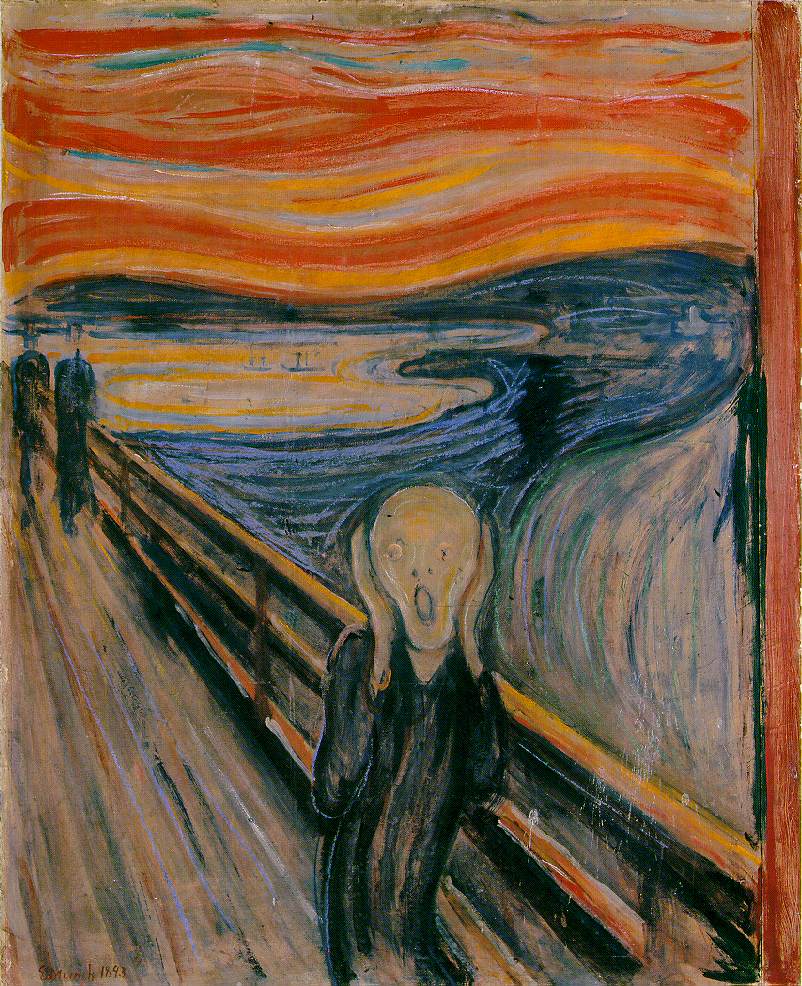
` It appears that Van Gogh's paintings had swirly patterns that look a lot like Kolmogorov scaling - in other words, pictures of what turbulence looks like! Look at Starry Night, Road with Cypress and Star and Wheatfield with Crows - these contain visual eddies. They were also painted when Van Gogh was particularly manic.
` When he was taking potassium bromide, to calm him down after he cut off his ear, his famous self-portrait shows no such thing.
` Other turbulent paintings, such as Edvard Munch's The Scream, do not fit Kolmogorov's theory nearly as well.
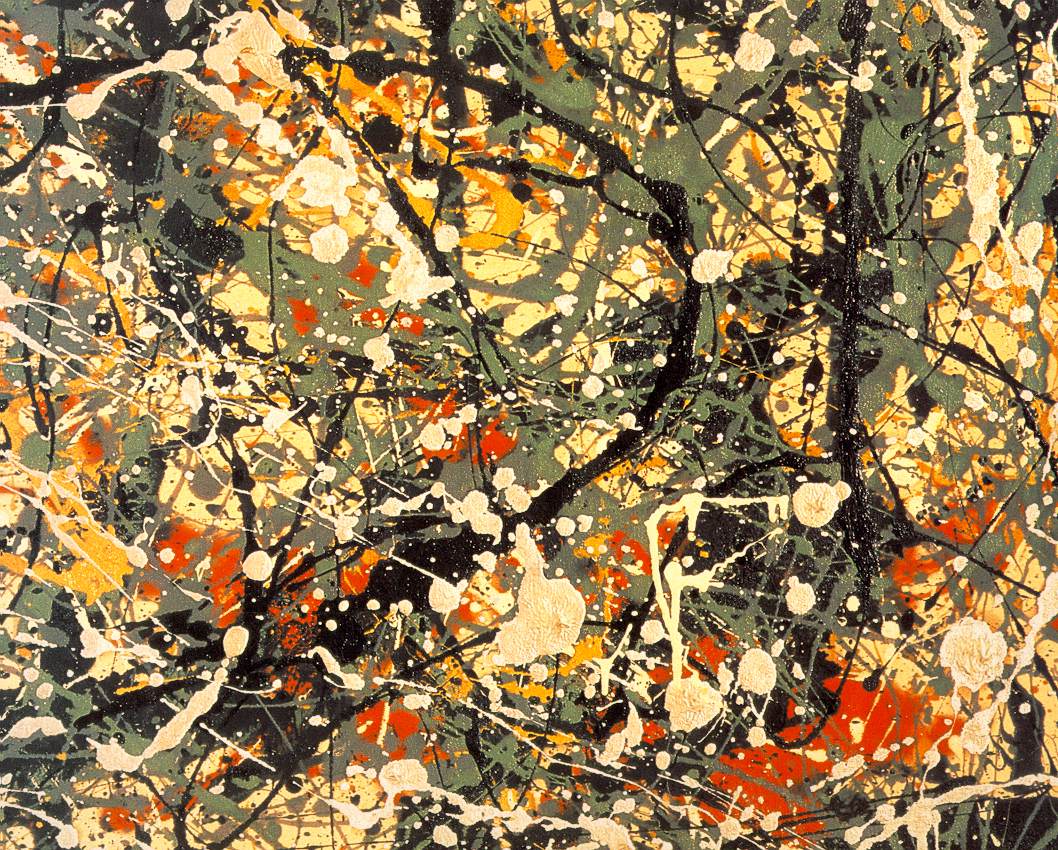
` Though, Van Gogh is not alone - Jackson Pollock's drip paintings (like this one) are full of fractals. Strange.

` Well, there ya go. I'm going to abandon the computer now to pounce on Lou because he's lying prone on the couch. I just love it when he does that. All vulnerable and stuff... Grar.

Friday, June 23, 2006

Cosmetic surgery to prevent blushing?

` How does anyone get this self-conscious? Can you imagine someone saying 'Doctor, I really think you should destroy my ability to blush with cosmetic surgery'?
` That's a big 'WTF' on my list.
` So... what do Dijk and Jong have to say about it?

The Lancet 2006; 367:2059

DOI:10.1016/S0140-6736(06)68922-8

Surgical treatment for blushing

Corine Dijk a and Peter J de Jong email address a

Although we agree with Marios Nicolaou and colleagues (April 22, p 1297)1 that fear of blushing can be a very embarrassing complaint, the suggestion that it might be helpful to use surgery to inhibit people's ability to blush altogether seems unwise for at least four reasons.

First, evidence suggests that people who fear blushing do not blush more intensely than non-fearful individuals.2,3 Fear of blushing seems to reflect a fearful preoccupation irrespective of actual blushing, and there are no solid data on which to base the idea that self-reported blushing propensity is a neurophysiological aberration.

Second, there is no clear empirical evidence to support the effectiveness of surgical treatment, since all published evidence comes from uncontrolled, retrospective studies. Third, as argued previously by Drummond,4 there is a reasonable chance that surgical intervention causes undesirable side-effects such as compensatory sweating.

Fourth, and perhaps most importantly, transection of sympathetic nerves in blushing-phobic individuals would be conceptually similar to removing the (pounding) heart in patients with panic disorder. There is convincing evidence that displaying moral emotions via blushing serves important psychological functions, and has clear remedial effects that are more pronounced than those of motor signs of shame and embarrassment.5 Hence, taking away the ability to blush implies suboptimum functioning in interpersonal behaviour.

We declare that we have no conflict of interest.

References

1. Nicolaou M, Paes T, Wakelin S. Blushing: an embarrassing condition, but treatable. Lancet 2006; 367: 1297-1299. Full Text | PDF (507 KB) | CrossRef

2. Gerlach AL, Wilhelm FH, Gruber K, Roth WT. Blushing and physiological arousability in social phobia. J Abnorm Psychol 2001; 110: 247-258. MEDLINE | CrossRef

3. Mauss IB, Wilhelm FH, Gross JJ. Is there less social anxiety then meets the eye? Emotion experience, expression, and bodily responding. Cognition Emotion 2004; 18: 631-662.

4. Drummond PD. A caution about surgical treatment for facial blushing. Br J Dermatol 2000; 142: 194-195. MEDLINE | CrossRef

5. de Jong PJ. Communicative and remedial effects of social blushing. J Nonverbal Behav 1999; 23: 197-218.


Affiliations

a. Department of Clinical and Developmental Psychology, University of Groningen, 9712 TS Groningen, Netherlands

` In sum: People who want cosmetic surgery to stop them from blushing clearly have a mental problem, not a physical problem, and trying to surgically alter themselves would probably cause a physical problem and perhaps more mental problems!
` I mean, who are these people that are so afraid of blushing? I talked to a girl once who wanted to be 'circumcised or something' because she couldn't stand her own natural lubrication ruining her panties when she became horny. Apparently, she said, this was part of her obsessive compulsion to clean everything.

` As Dave Barry would say; I am not making this up.

` What is it with people? What causes them to be so self-conscious? Once, I watched an episode of Extreme Makeover - I was brave! - and the people looked absolutely normal! The guy had crooked teeth and needed braces, I think, because his chin was set too far back. Instead, they filed his teeth down, put caps on them, and filled his chin in with fat, thereby eliminating any possibility that he might actually have his teeth rearranged to allow him to bite properly!
` Not only that, he didn't look that much different - or better - afterward! Neither did the woman. And yet they seemed to be ecstatic when the bandages came off! I mean, why does anyone put up with people implying to them that they don't look good enough?
` That can be very problematic to people with mental conditions, and can even cause mental conditions such as anorexia! And now... blushing?

` I mean, how many people have had to at least talk with plastic surgeons in order for this issue of 'I can't stand it when I blush' to become important enough to publish a paper about it?
` Really, I think their problem is that they feel stressed and think that this will make them feel better. It might, but I think the best thing to do is get rid of the stress!

Friday, June 02, 2006

Monkey syntax?

` When the dominant male of a group of putty-nosed monkeys (Cercopithecus nictitans) sees a leopard, he makes the "pyow" call. When he sees an eagle, he makes the "hack" call. And when he wants to command the females and young to move on, he says pyow-pyow-pyow... hack hack hack hack!
` This is something only humans were thought capable of. Happily, this idea is now apparently proven wrong.
` Says the discoverer of this phenomenon, Kate Arnold of St. Andrews University;

“The pyow-hack sequence means something like ‘let’s go’ whereas the pyows by themselves have multiple functions and the hacks are generally used as alarm calls.”
` Her colleague, Klaus Zuberbühler, said;
"Whenever they do the sequence, the troop moves on and leaves. By combining these two alarm calls into a high-order sequence, they generate a third meaning that tells everyone it is a good idea to move on."
...He added that songbirds are known to combine sounds in structure sequences, but it has not been linked to meaning or a command to others.
` Isn't that interesting? These monkeys are able to ignore the meaning of each individual 'pyow' and 'hack' when they are made together in a string, and instead interpret them to mean something else! In other words, the 'let's go' call is more than the sum of its pyows!
` I wonder how that could have come about, anyway? Perhaps some brilliant monkey decided to try using a sequence of 'alarm' calls to stir the others into motion, and after a while it caught on?

` Source: TimesOnline and Nature.

Wednesday, May 24, 2006

Autistic people don't daydream?

` Once again, a Nature article I found interesting. You may ask why I don't just write a little blurb about an article of interest and simply link to it. The problem is, these articles are only available for a few days before being closed off until you pay money.
` I think that's ridiculous - if you can access something once, and print it or save it to your hard drive, then why pull it offline?
` Anyway, here's the AOI (Article of Interest):

Published online: 8 May 2006; doi:10.1038/news060508-3
Autistic brains may daydream less
Neural networks used to self-reflect are dulled in autistics.
Helen Pearson

Autistic patients may lack the ability to daydream normally, say researchers who have found that these people's brains act differently when they are taking a break.

Neuroscientists know that a certain network of brain regions fires up when our minds wander, and that this is important for pondering and reminiscing about ourselves, others and our emotions. Other studies have hinted that autistic patients, who have learning and social problems, might have abnormalities in this region but the details have been unclear.

To pin down whether autism is related to these brain changes, Daniel Kennedy of the University of California at San Diego, La Jolla, and his colleagues studied 15 adults with some form of autism and 14 healthy controls. The team used functional magnetic resonance imaging (fMRI) to scan the 'daydreaming' regions, which lie in the middle of the brain.

In healthy people, these spots become active when the brain is resting — and dampen down when the brain is working hard at a mental puzzle, the researchers confirmed. They also showed that part of the network revs up when participants read emotional words, such as 'murder' or 'blood', compared with bland ones such as 'table'.

But the brains of autistic patients revealed a different picture. Their daydreaming network seemed permanently dampened; it did not show increased activity during rest and was not roused by emotional words.

The team showed that those patients with a more abnormal pattern of activity in these regions tended to have greater social difficulties in real life. "This critically important area is not functioning the way it should," Kennedy says.

Time to ponder

The study suggests that this paralysed network could prevent a patient's brain from conjuring a normal internal picture of themselves and others, Kennedy says, and so interfere with social behaviour.

Alternatively, it may be the social problems that are somehow altering the brain network. One way to investigate this would be to look at the brains of young children before the first signs of autism arise, to see if the same regions are dampened.

Researchers have already found problems in this same resting network in patients with Alzheimer's disease, suggesting that this region may be particularly susceptible to disruption.

Autism is thought to be one of a spectrum of disorders in which people suffer varying degrees of difficulties in communication, social interactions, and in showing repetitive behaviour. The condition is estimated to affect between two and six children in every 1,000.

Quite what causes the disorders remains a topic of hot debate. Researchers know that the condition tends to run in families, which suggests that genes are involved. One recent discovery is that autistic children have brains that are larger and grow faster than those of other kids, perhaps setting up problems later on in life.

` Hmm. Growth that is out of synch with development? I find the whole thing interesting.